
The Avery Journal
Florida Substantial-Improvement Planning: What Every Homeowner Needs to Know in 2025
Substantial-improvement planning considers counted improvement costs in relation to the accepted value of the building, excluding land. For a home subject to applicable floodplain regulations, reaching or exceeding the applicable threshold may make the project a substantial improvement and require floodplain compliance work. Confirm applicability, the threshold calculation, accepted valuation, and counted project costs with your local building department before finalizing your remodel.
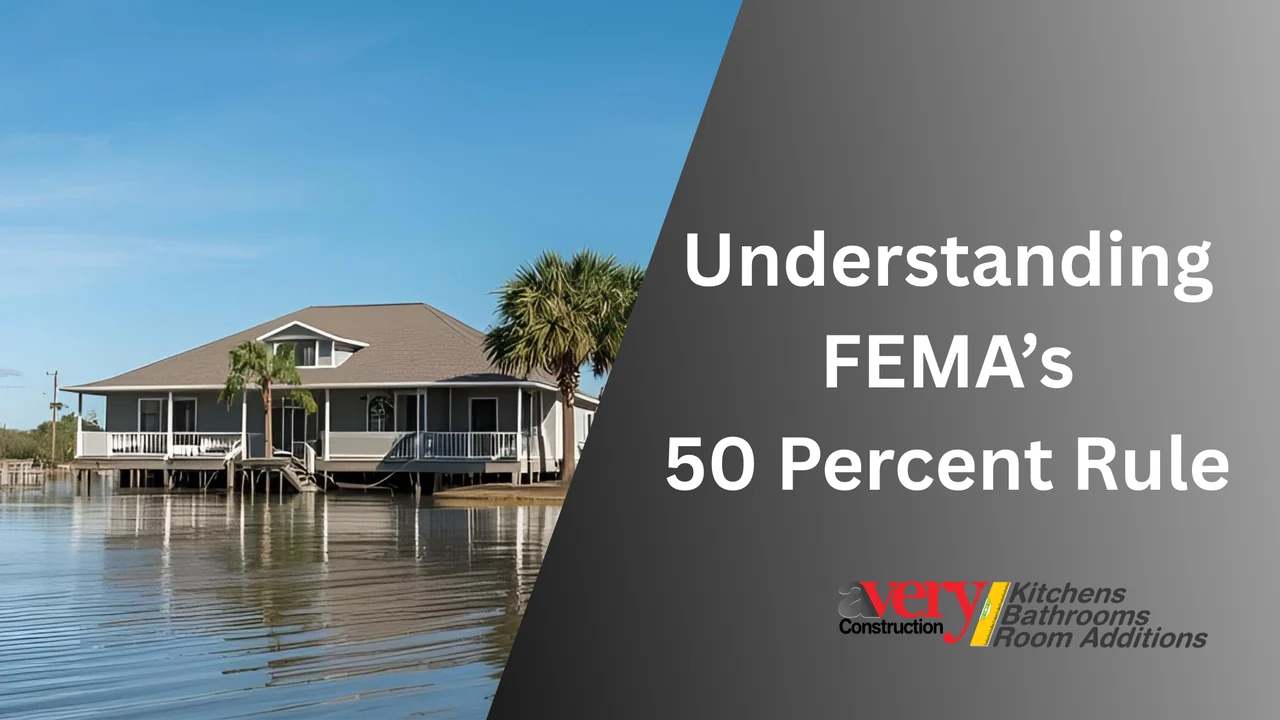
Substantial-improvement planning considers counted improvement costs in relation to the accepted value of the building, excluding land. For a home subject to applicable floodplain regulations, reaching or exceeding the applicable threshold may make the project a substantial improvement and require floodplain compliance work. Confirm applicability, the threshold calculation, accepted valuation, and counted project costs with your local building department before finalizing your remodel.
Originally published in 2025. This article is retained as planning guidance, not a determination of the requirements for a particular property or a statement of current local rules.
Remodeling in Florida comes with its own set of challenges, and substantial-improvement requirements can be an important part of planning. Discovering floodplain requirements late in the process can change the scope of a project that initially seemed straightforward.
At Avery Construction, we believe knowledge is power. Understanding the requirements that may apply to your property helps you ask better questions before committing to a design. This article explains the requirements in plain English and outlines planning conversations to have with your contractor and local building department.
What Are Florida’s Substantial-Improvement Requirements?
The source article describes substantial-improvement requirements in connection with FEMA’s National Flood Insurance Program (NFIP). In general terms:
- A renovation whose counted improvement costs reach or exceed the applicable threshold relative to the building’s accepted value, excluding land, may be classified as a “substantial improvement” under applicable floodplain regulations.
- A substantial-improvement determination may require the building to meet applicable floodplain-management requirements, rather than addressing only the rooms being remodeled.
The local authority must confirm whether these requirements apply to your property and how the calculation is made. Depending on the building and applicable requirements, compliance work may involve elevation, foundation changes, or protection of building systems. It should not be assumed that every home or every renovation requires the same work.
Why Substantial-Improvement Requirements Exist
The requirements’ floodplain-management purpose is to address flood vulnerability when buildings undergo substantial improvements. A renovation in a regulated flood-hazard area can therefore raise questions beyond the finishes and layout included in the original design.
For homeowners, the practical lesson is to consider floodplain compliance early. It may affect the scope, sequence, and feasibility of a remodel.
How Substantial-Improvement Requirements Affect Remodeling Projects in 2025
Imagine planning a remodel whose counted improvement costs exceed the applicable threshold relative to the building’s accepted value. If the local authority determines that the project is a substantial improvement, additional compliance work may be necessary.
Questions to discuss with the building department and design team include:
- Would the building need to be elevated to meet applicable flood-elevation requirements?
- Would the foundation or other structural components need changes?
- Would mechanical, electrical, or plumbing systems need protection, relocation, or other work?
- What other building-code requirements apply to the proposed renovation?
Energy and hurricane-protection requirements should be checked separately with the permitting authority; do not assume that all such upgrades automatically follow from reaching the applicable substantial-improvement threshold. Resolving these questions early gives you a clearer picture of the work involved.
Why Transparency from Contractors Matters
Discovering a significant compliance issue after design work is complete—or during construction—can force you to reconsider the project. Transparency about unresolved requirements is important from the first planning conversation.
Before committing, ask your contractor and the local building department to clarify:
- The property’s flood-zone status and the valuation method accepted for the building.
- Whether the proposed project may reach the applicable substantial-improvement threshold.
- What a compliance determination could mean for scope, scheduling, and feasibility.
These conversations help you make an informed decision. They also distinguish preliminary planning assumptions from requirements confirmed by the permitting authority.
Frequently Asked Questions About Substantial-Improvement Requirements
1. How Do I Know if My Home Is in a Flood Zone?
You can consult FEMA’s Flood Map Service Center or contact your local building department. Ask the department to confirm which floodplain requirements apply to your particular property, and discuss that information with your contractor.
2. Do Substantial-Improvement Requirements Apply to All Renovations?
Do not assume they apply identically to every renovation. The source article discusses residential and commercial buildings in flood-hazard areas, but applicability and the treatment of proposed work need to be confirmed locally. That reference to commercial buildings is regulatory context, not a statement about Avery’s current service offering.
3. What if My Remodel Is Below the Applicable Threshold?
Being below the threshold does not by itself establish that a project has no compliance obligations. Ask whether local rules count multiple improvements together and, if so, over what period. Do not assume that dividing work into smaller projects avoids the applicable requirements.
4. Are There Exceptions?
The treatment of maintenance, minor improvements, and other work must be confirmed with the local authority. Ask which costs are included or excluded. Kitchen and bathroom renovations, additions, and structural changes should be discussed explicitly rather than assumed to be exempt.
How to Plan Your Remodel Around Substantial-Improvement Requirements
- Confirm the building valuation. Ask which valuation method and documentation the local authority accepts. The calculation concerns the building, excluding land; do not assume an assessment or appraisal will automatically be accepted.
- Plan for possible compliance work. If the project is near the applicable threshold, consider how additional requirements could affect the design and construction sequence.
- Choose a contractor familiar with local permitting. Discuss experience with floodplain-related reviews and how questions will be coordinated with the building department.
- Ask for transparent assumptions. Have the proposed scope identify whether threshold and compliance questions remain unresolved before treating the plan as final.
Why This Matters in 2025
For the homeowners addressed by this 2025 article, the central planning lesson was to consider floodplain requirements before moving ahead with a remodel. That lesson remains the purpose of this archived guidance, without assuming that enforcement practices or local rules are unchanged.
Confirm the requirements for your property before proceeding. Unresolved permitting and compliance questions can affect whether the planned work can go ahead as designed.
Final Thoughts
Substantial-improvement requirements can feel intimidating, but understanding them early gives you a more informed starting point. Review the building’s flood-zone status, establish the locally accepted valuation, and clarify how the proposed work will be evaluated.
A clear conversation with your contractor and local building department helps separate design preferences from compliance requirements. Use this article as a starting point for those questions, not as a substitute for a property-specific determination.