
The Avery Journal
Florida-Proof Design: Remodeling Choices That Stand Up to Florida’s Heat, Humidity & Salt Air (The Ultimate Guide for Homeowners)
Remodeling for Florida means pairing moisture-resistant materials with humidity control, finishes suited to sun exposure, corrosion-resistant hardware, and outdoor spaces designed for shade and drainage. Cabinet construction, flooring, paint, windows, and doors all deserve climate-specific consideration. These choices can help limit deterioration, but suitability depends on the particular product, installation, exposure, and maintenance; “Florida-proof” is a design approach, not a promise that a home is immune to weather or damage.
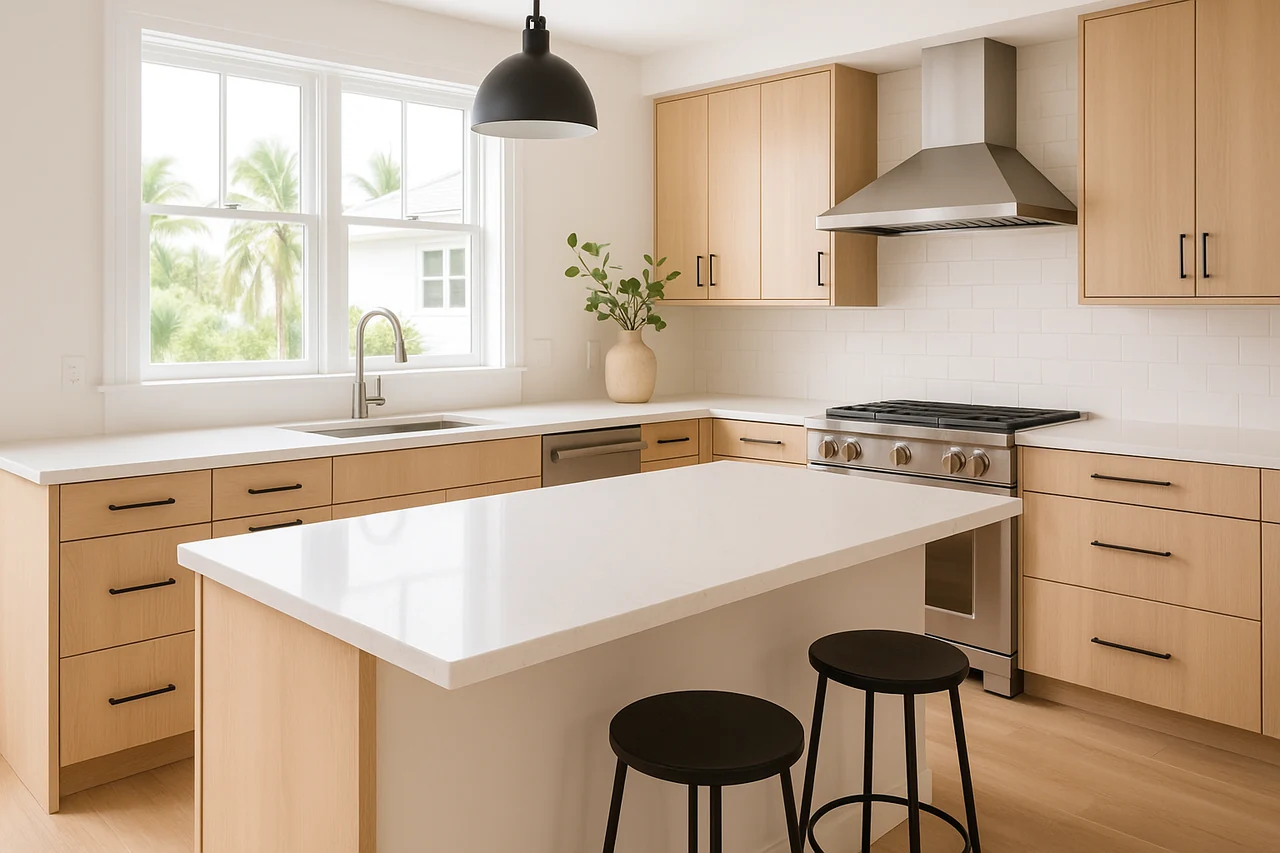
Remodeling for Florida means pairing moisture-resistant materials with humidity control, finishes suited to sun exposure, corrosion-resistant hardware, and outdoor spaces designed for shade and drainage. Cabinet construction, flooring, paint, windows, and doors all deserve climate-specific consideration. These choices can help limit deterioration, but suitability depends on the particular product, installation, exposure, and maintenance; “Florida-proof” is a design approach, not a promise that a home is immune to weather or damage.
Florida is paradise—until the climate starts taking it out on your home. In Tampa, Clearwater, St. Pete, Palm Harbor, and other Gulf Coast communities, homeowners may recognize problems such as:
- Cabinets that swell or warp.
- Floors that cup or buckle.
- Doors that become difficult to close in summer.
- Hardware that corrodes.
- Paint that fades or cracks.
- Mold in warm or damp corners.
- Outdoor materials that deteriorate sooner than expected.
These problems need not be accepted as an unavoidable part of Florida life. Thoughtful material selection and remodel planning can address the conditions behind them. This guide explores construction and design choices for heat, humidity, UV exposure, and salty air.
Why Florida Remodels Need Climate-Specific Planning
Generic remodeling advice may overlook the exposure a Florida home faces. Consider these four climate stressors when planning materials and assemblies.
1. High Humidity
Persistent humidity and damp conditions can contribute to swelling and warping wood, blistering paint, cupping floors, mold growth, and cabinet boxes expanding and contracting. Moisture management matters throughout a home, not just in bathrooms.
2. Salt Air
Salt exposure can affect coastal homes and may extend inland, depending on local conditions. Rather than relying on a fixed distance from the coast, consider the home's actual exposure when selecting metals and finishes. Corrosion can affect:
- Door handles and hinges.
- Outdoor fixtures and railings.
- Cabinet hardware and appliances.
- Grills and outdoor kitchens.
3. Intense UV Light
Strong sun exposure can fade or degrade paint, fabrics, cabinetry, flooring, and outdoor finishes. Review UV suitability where materials receive direct sunlight rather than assuming every finish will perform the same way.
4. Hurricane-Season Weather
High winds and driving rain place demands on windows and doors, rooflines, exterior materials, and drainage systems. Climate-conscious design considers storm exposure alongside everyday comfort, energy performance, and material condition. No material choice alone makes a home storm-proof.
Florida-Proof Remodeling: What to Consider and Where to Be Cautious
Use this room-by-room, material-by-material guide as a starting point. Specific product ratings, installation requirements, and the conditions in your home should guide final selections.
1. Cabinetry Selected for Moisture Resistance
Florida-Friendly Cabinet Materials to Consider
- Marine-grade plywood: A moisture-resistant cabinet construction option to discuss. The plywood grade does not remove the need for appropriate sealing and moisture management.
- High-pressure laminate (HPL) interiors: A cleanable surface option; humidity performance depends on the underlying construction and protected edges.
- Thermofoil fronts on a suitable core: Consider the core, sealing, and the product's suitability for heat and moisture rather than selecting by the face material alone.
- Fully sealed hardwoods: Maple or oak may be options where conditions are appropriate and indoor humidity is managed.
Cabinet Materials Requiring Caution
Particleboard, low-grade medium-density fiberboard (MDF), and unsealed wood interiors deserve close scrutiny in damp locations. Moisture exposure can cause swelling or instability; an attractive door front does not establish the durability of the cabinet box.
Design tip: Lighter cabinet colors can give a home a bright, coastal feel. Color is an aesthetic choice, not a substitute for a suitable finish and construction.
2. Flooring for Humidity, Sand, and Everyday Traffic
Florida flooring selections should account for humidity, wet footprints, beach sand, sunlight, children, pets, and heavy traffic.
Flooring Options to Consider
- Luxury vinyl plank (LVP): Offers coastal styles and can feel quieter underfoot. Water-resistance claims must be checked for the specific product and installation; they should not be treated as protection for the entire floor assembly.
- Porcelain tile: An option for moisture-exposed areas and coastal or modern designs. Confirm suitability for the intended setting rather than treating tile as indestructible.
- Engineered hardwood: An option to evaluate if you want a wood finish. Its layered construction can help with stability, but it is not universally suitable for every Florida home or moisture condition.
Flooring Requiring Caution
Solid hardwood, vinyl without suitable performance specifications, moisture-sensitive laminate, and carpet in high-traffic areas may not be the right fit for the conditions described above. Evaluate exposure, construction, installation, and maintenance rather than ruling an entire product category in or out by name alone.
3. Hardware and Metals Selected for Salt Exposure
Where salt exposure is a concern, consider these options:
- 316 marine-grade stainless steel: A corrosion-resistant option for coastal applications; suitability still depends on the component and exposure.
- Physical vapor deposition (PVD)-coated hardware: Review the specific coating's scratch and corrosion performance.
- Powder-coated metals: An option for exterior fixtures and railings when the product is suitable for the location.
Design insight: Black and brushed nickel finishes offer different looks from polished finishes. Appearance alone does not establish corrosion resistance; review the underlying metal, coating, and care requirements.
4. Paint and Finishes for Sun and Moisture
Choose paint and coatings for the surface and exposure rather than assuming any formula is suitable for Florida conditions.
Interior Paint
Consider acrylic latex products with appropriate light-exposure performance, mildew-resistant formulas for bathrooms, kitchens, and laundry rooms, and satin or semi-gloss finishes where suitable for moisture-prone rooms. Mildew-resistant paint does not replace moisture control.
Exterior Paint
Discuss elastomeric coatings and primers intended for the relevant sun and moisture exposure. Confirm compatibility with the surface and the complete coating system rather than assuming a coating alone will prevent moisture damage or fading.
Color tip: Warm whites, sand tones, muted greens, and soft blues are options for Florida's strong natural light. Choose the palette you enjoy while evaluating finish performance separately.
5. Moisture and Humidity Control
Materials are only part of the plan. Consider the home's moisture and heat-management needs alongside the visible finishes. Depending on those needs, topics to discuss include:
- A whole-home dehumidifier.
- Properly sized bathroom fans with humidity sensors.
- Moisture-resistant drywall in suitable locations.
- Insulation upgrades or radiant barriers as part of the home's overall heat-management plan.
- Cabinet ventilation around appliances where required by the appliance and cabinet design.
These less-visible decisions can support material performance and comfort. They do not establish a particular remodel lifespan.
6. Windows and Doors for Florida Weather
Impact ratings deserve attention, but so do glass, frames, and the way openings support daily living. Consider:
- Low-emissivity (Low-E) glass: Review the product's solar and UV performance.
- Vinyl or fiberglass frames: Options to evaluate for the home's conditions.
- Impact-rated products: Confirm the ratings, installation requirements, and applicable local requirements for the particular opening.
- Black frames: A coastal-contemporary aesthetic option.
- Wide multi-panel sliders: A way to connect indoor and outdoor spaces where appropriate.
Black frames can offer clean lines and versatility, but their visual appeal is separate from weather performance.
7. Outdoor Living Materials and Design
Outdoor spaces face direct sun, moisture, and potentially salt exposure. Material selection should reflect those conditions.
Outdoor Materials to Consider
- Porcelain countertops rated for the intended outdoor application.
- Composite decking suitable for the exposure.
- Powder-coated aluminum structures.
- Porcelain or appropriately sealed stone flooring.
- Appliances specifically rated for outdoor use and the expected coastal exposure.
Outdoor Design Features
Plan for shade structures, appropriate drainage, outdoor-rated fans, and corrosion-resistant lighting. Coordinate these features with material selection instead of treating durability as a property of the finish alone.
Florida Design Aesthetics That Age Well
The original guide highlights four styles to consider. Their visual character does not itself establish climate resistance; combine the look with appropriate materials and detailing.
1. Coastal Modern
Light woods, whites, and soft blue-green accents create a bright coastal palette.
2. Tropical Minimalism
Clean lines, stone textures, and natural light keep the design simple and open.
3. Bright Mediterranean
Creamy tones, arches, and warm stone provide a softer architectural character.
4. Outdoor-Integrated Living
Large sliders, coordinated transitions, and pool views connect the interior with outdoor spaces.
Long-Term Maintenance: Why Material Selection Matters
Materials poorly matched to their exposure can lead to repainting, rusted hardware replacement, warped cabinetry or flooring, mold remediation, outdoor kitchen repairs, and deterioration of exterior spaces.
Think about cleaning, inspection, maintenance, and replacement needs when comparing options. Climate-conscious choices may help limit some of these problems, but actual service life depends on product quality, installation, exposure, and ongoing care. There is no single durability multiplier for a remodel.
Why This Approach Matters
The central idea is to align a remodel with the climate the home actually experiences. Moisture management, suitable finishes, corrosion-resistant components, and thoughtful outdoor planning work together. Use the guide to frame material discussions and evaluate the details of your own home, rather than treating “Florida-proof” as a universal performance claim.